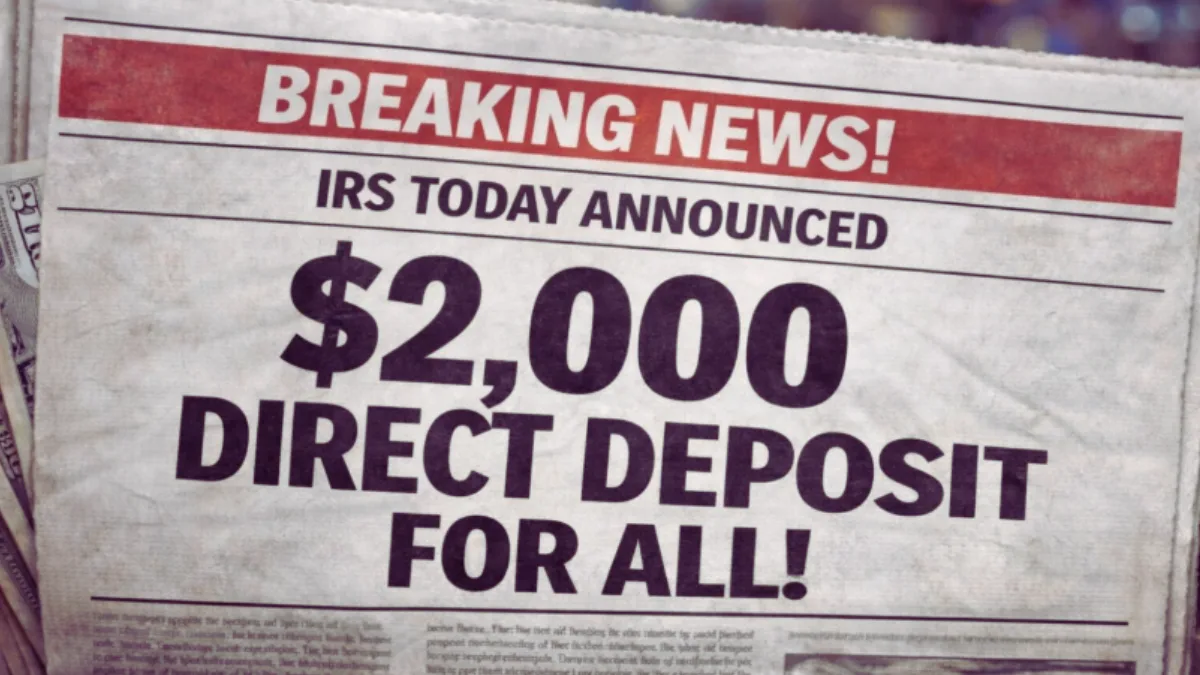
Have you seen the posts? The texts from your sister, the news alerts on your phone, the videos popping up everywhere? “IRS Sending $2,000 Direct Deposits!” It’s enough to make your heart skip a beat. Could it be? Is some real help finally on the way? That immediate flicker of hope is a powerful feeling, especially when budgets are tight and bills are stacking up.
Let’s take a deep breath together. I’m here to walk you through this, not as an expert, but as a friend who’s also tired of the confusing headlines. We’ll figure out what’s really going on, who it’s for, and most importantly, what you should do next.

First Things First: Don’t Get Scammed.
This is so important I’m putting it right at the top. My stomach churns thinking about people getting tricked when they’re just looking for help. The IRS will NEVER contact you first by text, email, or social media about a refund or stimulus payment. Those messages with links to “claim your $2,000” are lies. They are traps set by thieves to steal your personal information and your money. If you get one, please delete it. The real IRS communicates by old-fashioned mail first.
So, What Is This $2,000 News About?
Here’s the real story, without the hype. This isn’t a brand-new, wide-open stimulus program for everyone. The “$2,000” figure making headlines is almost always connected to a few specific situations:

- Tax Refunds with the Earned Income Tax Credit (EITC) or Additional Child Tax Credit (ACTC): By law, the IRS cannot issue refunds for people claiming these credits until mid-February. This delay is to give them more time to prevent fraud. For many families, these credits add up to a significant refund—often $2,000 or more. So, in late February, a wave of these delayed refunds hits bank accounts. It’s not new money; it’s the refund they were already owed, finally arriving.
- Corrected or Adjusted Refunds: Sometimes, the IRS corrects a mistake from a past tax return. If they find you were owed more, they send the difference with interest. These smaller batches of payments can also trigger news reports.
- State-Specific Programs: Occasionally, a state might issue its own tax credit or rebate (like an inflation relief check), and people confuse it with an IRS federal payment.
The core message: If you receive an unexpected deposit from the IRS, it is most likely a refund or credit you were already eligible for based on a tax return you have already filed.
Who Actually Qualifies?
This is the part where we manage expectations. You are likely to get one of these deposits only if:

- You filed a 2023 or earlier tax return.
- That return included the Earned Income Tax Credit (EITC) or Additional Child Tax Credit (ACTC).
- You are due a refund.
- Or, the IRS is correcting an error on a past return you filed.
If you haven’t filed a tax return in the last few years, you almost certainly will not get an automatic deposit. The IRS needs your current information to know where to send money.
Your Action Plan: What to Do Right Now
Feeling a little deflated? I get it. Hope is a tricky thing. But let’s turn that energy into positive action. Here’s your simple plan:
- Check Your Status, the Safe Way. Don’t click random links. Go directly to the official IRS website and use the “Where’s My Refund?” tool. You’ll need your Social Security Number, filing status, and the exact refund amount from your tax return. This tool gives you the real-time status of any refund.
- Sign Up for IRS Online Account. This is a game-changer. You can see your payment history, any scheduled payments, tax records, and if you owe anything. It’s the single best way to cut through the rumors and see your own truth.
- File Your Taxes! If you haven’t filed for 2023, this is your most important step. Even if your income is low, you might qualify for valuable credits. Many communities offer free tax preparation help. This is how you make sure you get every dollar you’re entitled to.
- Guard Your Information Like Gold. Repeat after me: No calls, no texts, no emails. If someone claiming to be from the IRS demands gift cards or wire transfers, it’s a 100% scam. Hang up.
A Personal Word on Hope and Patience
I know how hard this is. You see a headline, and for a second, you let yourself dream: That $2,000 could cover the car repair. It could be a month’s groceries. It could mean breathing room. When it turns out not to be a universal gift, it feels like a letdown. That emotional rollercoaster is exhausting and real.
Please, be kind to yourself. The financial stress so many are feeling is heavy. Don’t add shame or frustration on top of it. Instead, focus on what you can control: your tax filing status, your personal information security, and where you get your facts.
The internet is loud with promises. Let’s be quiet and careful with our trust. The real information isn’t flashy, but it’s solid. It’s on the official IRS website, it’s in your own online account, and it’s in taking one sensible step at a time.
You’ve got this. Stay safe, stay informed, and let’s look out for each other amidst all the confusing headlines.
Bottom Line: The $2,000 deposit headlines are usually about delayed tax refunds, not a new stimulus. Check “Where’s My Refund?” on the official IRS website, file your taxes if you haven’t, and protect yourself from scams above all else.