Ever open your bank account, half-asleep, just hoping there’s enough for coffee? And then you see something that makes you blink. A deposit you weren’t expecting. A little surprise that turns your whole morning around.
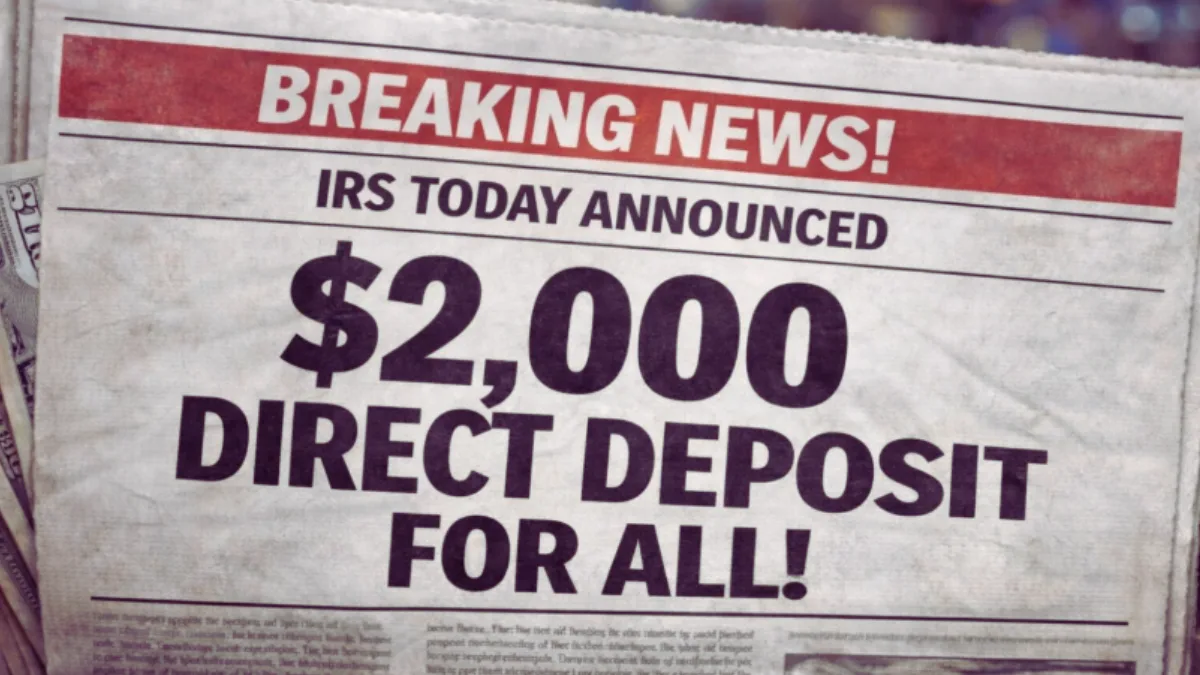
Well, friends, this January, the IRS might just be that morning surprise for a lot of people. Rumors and whispers are swirling about a possible $2,000 deposit landing in eligible accounts. Is it real? Who might get it? And how can you check? Let’s break it down in simple, plain English.
First, Take a Deep Breath. Let’s Clarify.
I know. Just hearing “IRS” and “surprise” in the same sentence can spike your heart rate. We’re trained to think a letter from the IRS means stress, not a potential financial hug. So, let’s be clear: This is not a scam email. We’re talking about legitimate, potential refunds or credit adjustments that could come as a direct deposit.
The key is not to get swept up in the excitement and click on shady links promising you “free government money.” The only place to get real information is from the IRS itself. But I’m here to help you understand what this buzz is all about.
What Is This $2,000 Deposit Actually For?
There’s no brand-new, magic stimulus that just appeared. Instead, this surprise often comes from things already in motion that you might have forgotten about or overlooked.
Here are the most likely reasons for an unexpected deposit:

- Delayed Tax Refund Adjustments: Sometimes, the IRS recalculates things after you’ve already filed. Maybe you overlooked a credit you qualified for, or there was a change in tax law applied to your return. If they owe you more, they’ll send it.
- Unclaimed Stimulus or Child Tax Credit Money: Believe it or not, some money from past programs might still be finding its way to people. If you were eligible but never received funds, filing a recent return could trigger that payment.
- Backlog Processing: The IRS has been working through a mountain of paper returns and corrections. Your “surprise” might just be your 2022 refund finally showing up in 2024!
Think of it like this: You ordered a package (your tax refund). Sometimes, the company (the IRS) sends a follow-up box with an extra item you paid for but they forgot to pack. The $2,000 figure is an estimate—it could be $1,200, $2,500, or another amount. It’s the idea of an unexpected sum that counts.
The “Check-In”: How to See If You’re Eligible
Okay, so how do you know if this surprise has your name on it? You need to do a little detective work, but it’s easy. Do not call the IRS. Their phone lines are swamped. The answers are online.
Step 1: Visit the IRS Website DIRECTLY.
Type IRS.gov into your browser yourself. Do not Google “IRS refund” and click the first ad. Go straight to the source.
Step 2: Use “Where’s My Refund?”
This is your best friend. You’ll find this tool right on the IRS homepage. You’ll need:
- Your Social Security Number (or ITIN)
- Your Filing Status (like “Single” or “Married Filing Jointly”)
- The exact refund amount you were expecting from your most recent tax return.
Step 3: Check Your IRS Online Account.
This is even better than “Where’s My Refund?”. If you create an account (it takes a few minutes to verify your identity), you can see everything: your tax records, any scheduled payments, notices, and your full balance. It’s the clearest window into what the IRS is doing with your money.
What to Do While You Wait (And How to Stay Calm)
The waiting is the hardest part. Here’s my advice:
- Manage Your Expectations. Please, don’t budget for this money until it is physically in your account. Hope for it, but don’t depend on it. That’s how heartbreak happens.
- See It as a Potential Bonus. If it comes, what will you do? I love the 50/30/20 rule for windfalls: 50% to future you (debt or savings), 30% to current you (something fun!), and 20% to others (a donation, treating a friend). Even $100 towards a credit card can feel amazing.
- Beware of the “Too Good to Be True” Trap. Scammers are having a field day with this rumor. The IRS will NEVER:
- Text or email you out of the blue about a refund.
- Demand payment via gift cards or wire transfers.
- Threaten to have you arrested immediately over the phone.
If someone does any of these, it’s a scam. Block, delete, and report.
A Personal Note: Why This Stuff Matters
I’ll be honest—I write about this because I’ve been there. Years ago, I got a check for $800 I wasn’t expecting. It was a correction from a student loan interest deduction I’d messed up. That $800 was my car repair fund. It was a literal lifesaver.
That’s why I want you to check. For some, $2,000 is a vacation. For others, it’s two months of groceries, or the difference between paying the electric bill and not. There’s no shame in that. Money is a tool, and an unexpected tool can fix a lot of creaky, stressful parts of life.
So, this January, take five minutes. Brew your coffee, go to the real IRS website, and check your account. You might just find a quiet, digital envelope waiting for you. And if it is? Take a moment to feel that relief, that joy, that surprise. You deserve it.
And if there’s nothing there? That’s okay too. You’re on top of your stuff, and that’s a win in itself. Now you can enjoy your coffee, and move on with your day, informed and in control.
Bottom Line: The surprise is possible, but only for some. Check officially, wait patiently, and plan wisely if it arrives. Here’s to pleasant financial surprises in the new year!
P.S. Was this helpful? Did you find a surprise? I’d love to hear your story (but please, never share personal financial details online!). Wishing you all the best.