Hey there, treasure hunter!
How many times have you gotten a quarter back as change and barely glanced at it? You might have just tossed it into a jar, a cup holder, or the bottom of your bag without a second thought. What if I told you that some of those seemingly ordinary coins could buy you a new car, a dream vacation, or pay off a big chunk of your mortgage?

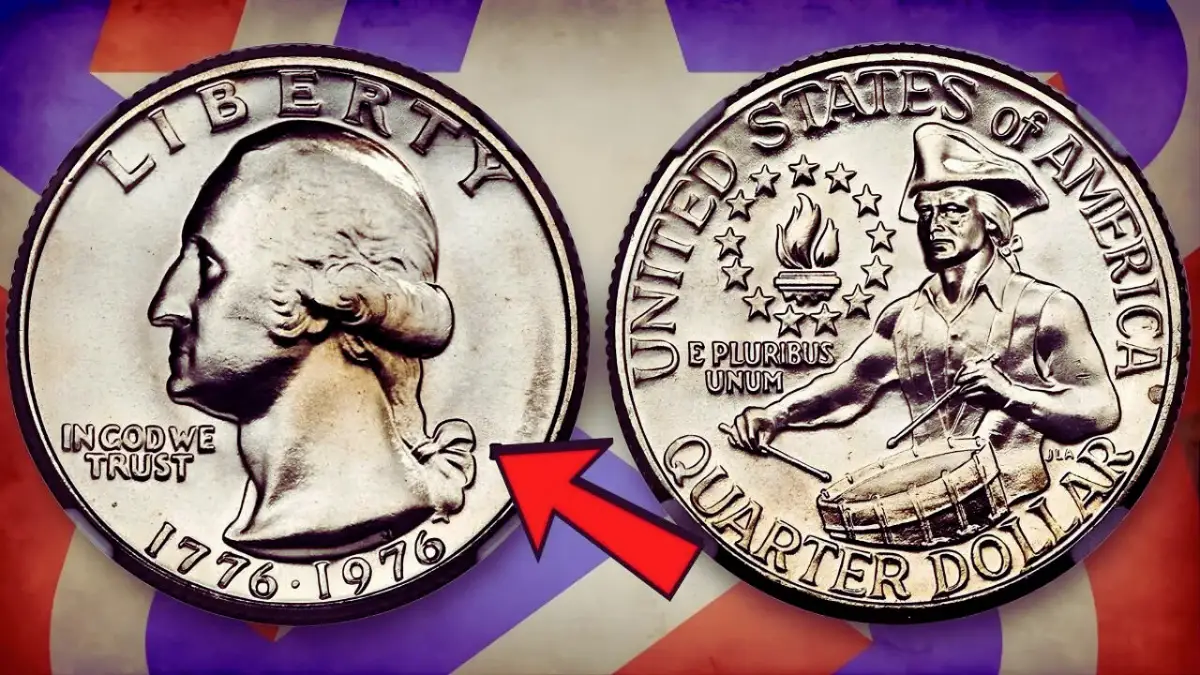
It sounds like a fantasy, but it’s absolutely true. While most Washington Quarters are worth just 25 cents, a handful of specific ones are hidden gems, waiting to be found. The thrill of the hunt is real, and it can start in your own home. Let’s dive into the amazing world of these valuable coins. Your payday might be hiding in plain sight.
Why Is a Simple Quarter So Valuable?
First, don’t feel bad if you’re skeptical. I was too! Quarters are the workhorses of our change. We use them for laundry, parking meters, and vending machines. But value in coin collecting comes down to three big things: Rarity, Condition, and Demand.
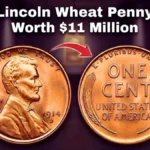
A coin becomes rare if very few were made, or if most were melted down or worn out. Condition is everything—a coin that looks like it just left the mint is worth exponentially more than a worn, circulated one. And demand? Well, that’s where collectors come in, searching for key dates to complete their sets.
The Washington Quarter, with George Washington’s profile on the front, has been made since 1932. For decades, it was made with 90% silver! That alone makes any quarter from 1932 through 1964 worth more than its face value—just for the silver content (about $4-$5 as of this writing). But we’re looking for the superstars, the ones that can be worth a life-changing amount of money.

The 9 Washington Quarters You Need To Find
Grab your coin jars and magnifying glass. Here are the 9 key dates and errors to search for. Remember, condition is KING. A worn example might be worth $50, but the same coin in pristine, uncirculated condition can be worth tens of thousands.
1. 1932-D (Denver Mint)
- Why it’s special: The first year of the series! The Denver mint made far fewer than the Philadelphia mint. Everyone wanted a new Washington coin, so many were saved, but high-grade examples are incredibly rare.
- What to look for: The small “D” mintmark on the reverse (back), right at the bottom near the wreath.
- Potential Value: In mint state (MS65+), this coin can fetch $15,000 or more.
2. 1932-S (San Francisco Mint)
- Why it’s special: Just like the 1932-D, this is a first-year, low-mintage coin from the San Francisco Mint. It’s the key to the early series.
- What to look for: The small “S” mintmark in the same spot on the reverse.
- Potential Value: Similar to the 1932-D, a top-grade example can be worth over $13,500.
3. 1937 Doubled Die Obverse
- Why it’s special: This is a dramatic mint error. The die used to strike the coins was mis-engraved, causing a distinct doubling of the date and the lettering “IN GOD WE TRUST.” It’s very obvious to the naked eye.
- What to look for: Clear doubling, especially on the date “1937” and the motto.
- Potential Value: A well-preserved example can easily be worth $2,000 to $10,000+ depending on grade.
4. 1942-D with “Type 2” Reverse
- Why it’s special: This is a one-year-only design quirk. In 1942, the mint adjusted the reverse design partway through the year to make the details stronger. The “Type 2” has a clearer motto and much stronger eagle’s leg feathers. Fewer were made.
- What to look for: The “D” mintmark. You must compare the reverse to a normal 1942-D. The Type 2 eagle’s leg has three distinct feathers pointing upward.
- Potential Value: In high grades, this variety can reach $5,000+.
5. 1950-D/S (Overmintmark)
- Why it’s special: This is a fascinating error. The Denver mint initially punched an “S” (for San Francisco) mintmark onto the die, realized the mistake, and then punched a “D” over it! Under magnification, you can often see the outline of the S beneath the D.
- What to look for: A 1950-D quarter where the D looks thick or distorted. You’ll likely need a magnifier to see the underlying S.
- Potential Value: A great find! Values range from $500 to over $3,000.
6 & 7. The Super-Stars: 1955-D & 1955-P (Low-Mintage Years)
- Why they’re special: In the mid-1950s, the mint produced hundreds of millions of quarters. But in 1955, production plummeted. The Philadelphia (no mintmark) and Denver (“D”) mints made some of the lowest numbers of the entire silver series. While common in circulation, they are extremely rare in flawless, mint condition.
- What to look for: Quarters from 1955 with no mintmark (Philadelphia) or a “D” mintmark.
- Potential Value: Here’s where dreams come true. A 1955 or 1955-D graded in near-perfect MS67+ condition can shatter records. One sold for over $50,700. Even in slightly lower grades, they are worth thousands.
8. 1964-D (The Last Silver Year – High Grade)
- Why it’s special: 1964 was the last year for 90% silver quarters. The Denver mint made hundreds of millions, so they are common… in worn condition. But because people knew it was the last silver year, many saved brand-new, uncirculated rolls. The competition is now to find the absolute finest ones—coins with full original luster, no contact marks, and perfect surfaces.
- What to look for: A 1964-D that looks like it’s never been touched. Perfect detail, shiny, no scratches.
- Potential Value: A perfect MS68 example is a multimillion-to-one find. They have sold for $35,000+.
9. 1970-S Proof Quarter (Small Date)
- Why it’s special: After 1964, quarters were made of copper-nickel. This rarity is a proof coin—a special, mirror-like finish coin made for collectors. In 1970, the San Francisco mint made a small number of proof sets. A tiny number of these proof quarters have a “Small Date” variety (the numbers in 1970 are smaller and differently shaped). It’s one of the great modern rarities.
- What to look for: It will only be in a 1970-S Proof Set. The date will look noticeably smaller and tighter than a normal 1970 quarter.
- Potential Value: Extremely rare. In its original proof set, it’s worth $5,000 and up.
How to Start Your Hunt (It’s Easier Than You Think!)
- Gather: Get all your change jars, piggy banks, and old coffee cans. Ask your family if they have any. Check that old dresser you inherited.
- Sort by Date: Look at every quarter’s date. Set aside anything from 1964 and earlier (silver!). Then, carefully look for the key dates above: 1932-D, 1932-S, 1937, 1942-D, 1950-D, 1955, 1955-D, and 1964-D.
- Check Condition: Is the coin worn smooth, or does it still have sharp details? Does it have its original shine (luster)? The more it looks new, the better.
- Handle with Care: If you find a potential candidate, hold it by the edges! Don’t rub it or clean it. Cleaning a coin destroys its surface and its value. Just put it in a soft cloth or a coin holder.
- Get a Second Opinion: For coins you think might be valuable, take clear, close-up photos of the front and back. Share them on reputable coin forum websites or take them to a local coin shop (look for well-established dealers). They can give you an initial assessment.
The Real Treasure Is the Thrill
I’ll never forget the feeling I had holding my first silver quarter. It wasn’t a key date, but it was history. It was minted during World War II and had passed through countless hands before mine. The possibility that the next coin I pick up could be worth a fortune… that’s a magic you can’t buy.
So tonight, instead of scrolling, start sorting. That simple act of looking, of paying attention, connects you to history and to a very real chance of discovery. You’re not just looking for metal; you’re looking for a story that ends with, “I can’t believe it was in my pocket the whole time.”
Happy hunting! And please, come back and tell me if you find something amazing.
P.S. Have you ever found a strange or old coin? Share your story in the comments below! Let’s celebrate the joy of the hunt together.